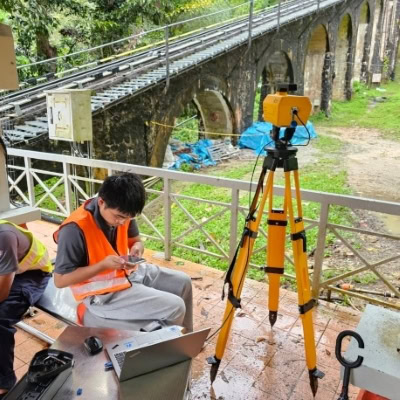
Bridge Monitoring
Bridge Load Testing (Static & Dynamic)
Carry out static and dynamic proof load testing to assess bridge performance under increased axle loads and actual traffic conditions. Install instrumentation including distributed fiber optic strain sensor and displacement sensors to measure strain and deflection response. Analyze collected data to verify structural capacity, validate design assumptions, and support safe operational decision-making for continued bridge service.
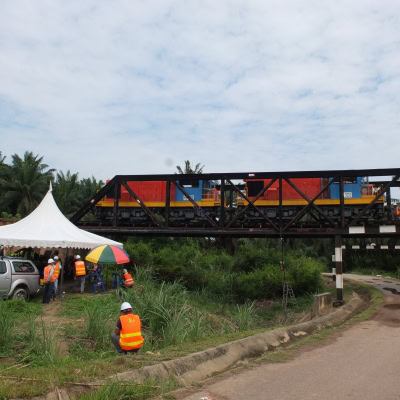
Bridge Pier Monitoring
Implement long-term monitoring of bridge piers following rehabilitation works to evaluate structural integrity and performance over time. Install distributed fiber optic sensing systems to continuously measure strain along critical sections. Monitoring data enables early detection of abnormal behavior, supports condition assessment, and ensures rehabilitation effectiveness under operational loading conditions throughout service life.
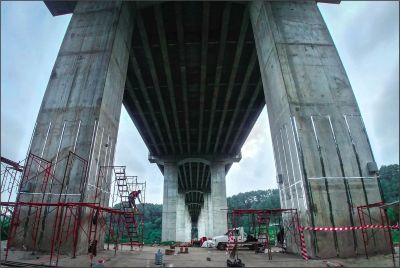
Bridge Deck & Bearing Monitoring
Monitor bridge deck and bearing behavior where movement exceeds allowable limits or after rehabilitation activities. Install high-precision displacement and strain sensors to track bearing movement and structural response under service loads. Continuous monitoring provides insights into performance trends, ensures effective load transfer, and enables early detection of potential issues affecting structural safety.

Box Girder Monitoring
Assess structural performance of box girders affected by tendon damage or replacement activities. Install monitoring systems to measure deflection and structural response before, during, and after tendon replacement works. Monitoring ensures structural stability throughout construction stages, verifies effectiveness of new tendon installation, and supports safe operation of the bridge system.

Hill Viaduct Monitoring
Monitor hill viaduct performance under increased loading conditions, particularly within challenging terrain environments. Utilize non-contact displacement measurement systems to safely capture structural movement without requiring direct access. Monitoring data supports performance evaluation, risk management, and ensures continued structural safety and serviceability under varying operational and environmental loading conditions.